
Your Child's Digital Footprint Is Forever.
What every parent needs to know about children's online privacy — and the 7-step action plan to protect your family starting today.
bttrfly Editorial·May 20, 2026·12 min read
In This Article
Every day, your child taps "accept" on apps, games, and websites — usually without understanding how much of themselves they're giving away. A single tap can reveal their name, their location, their friendships, their sleep patterns, their interests, and their fears. And unlike a mistake on the playground, what happens online doesn't stay in the moment. It stays forever.
Children's online privacy has become the single most searched parenting topic of 2026. And it's not hard to see why. As the first generation of fully digital children reaches young adulthood, they're speaking out about what it felt like to have their entire childhood archived online without their consent. Meanwhile, online threats have grown more sophisticated, more invisible, and more targeted than ever before.
"Online privacy is becoming as essential a life skill as teaching a child to cross the road — yet most families have never had the conversation."
— Information Commissioner's Office (ICO), April 2026
The good news? You have more power than you think. This guide gives you the full picture: the real risks, the new laws working in your favor, and a concrete action plan you can start today.
Section 01
What Is a Digital Footprint — and Why It Starts Earlier Than You Think
A digital footprint is the permanent, often invisible trail of data created every time someone interacts online. For your child, that trail might include the photos you posted of their first steps, the apps they play games on, the searches they run, the forms they fill out at school, and the location data silently collected in the background of dozens of apps.
Here's what shocks most parents: your child's digital footprint likely began before they were born. Pregnancy announcements, ultrasound photos, and newborn hospital posts mean many children already have years of archived data by the time they're old enough to use a device themselves.
What makes 2026 different from even three years ago is the sophistication of what gets collected. It's no longer just names and email addresses. Apps today collect behavioral patterns, emotional responses, sleep schedules, academic performance, physical location in real time, and even voice data. Much of this happens automatically — and quietly — the moment your child hits "agree."
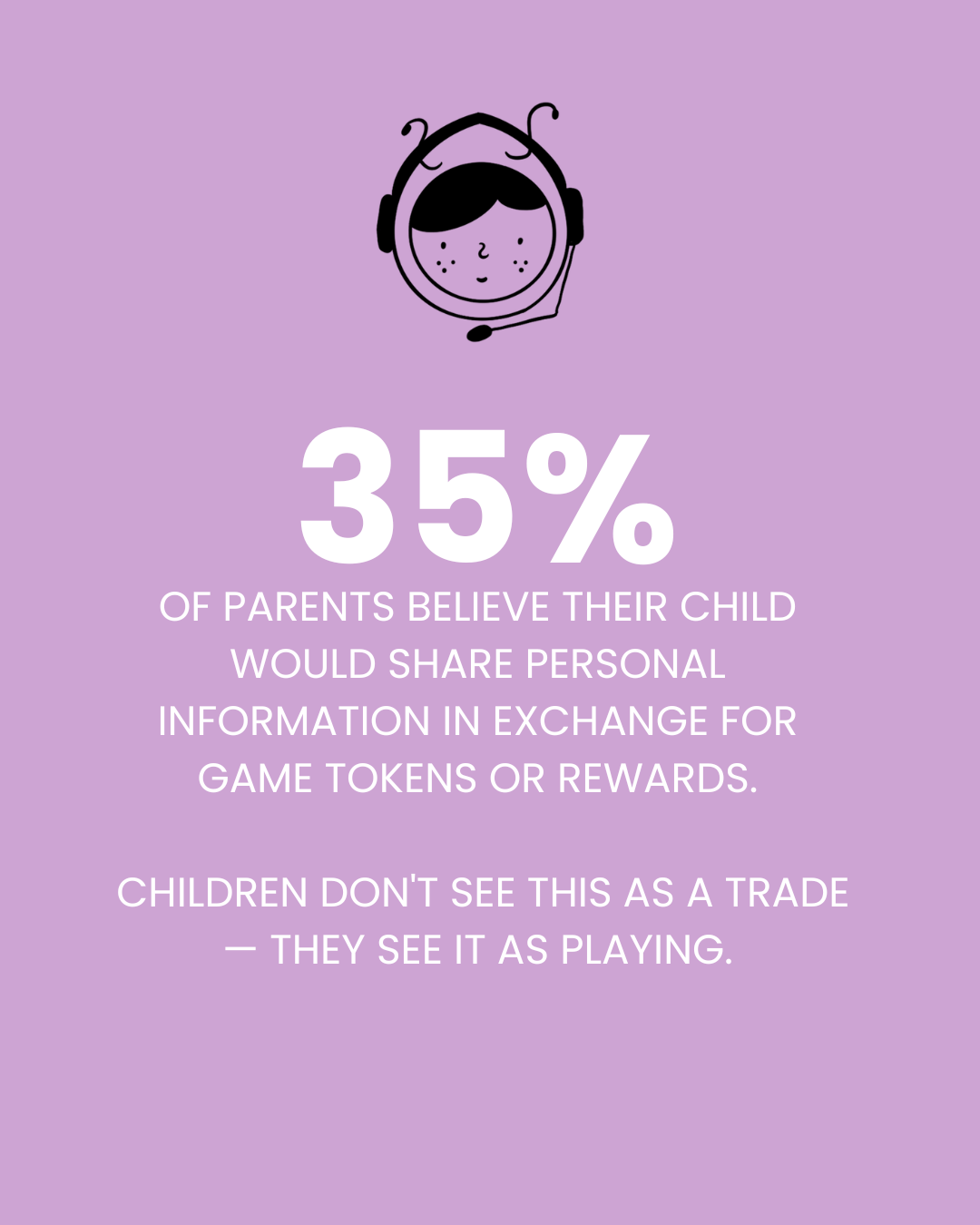
What makes 2026 different from even three years ago is the sophistication of what gets collected. It's no longer just names and email addresses. Apps today collect behavioral patterns, emotional responses, sleep schedules, academic performance, physical location in real time, and even voice data. Much of this happens automatically — and quietly — the moment your child hits "agree."
Section 02
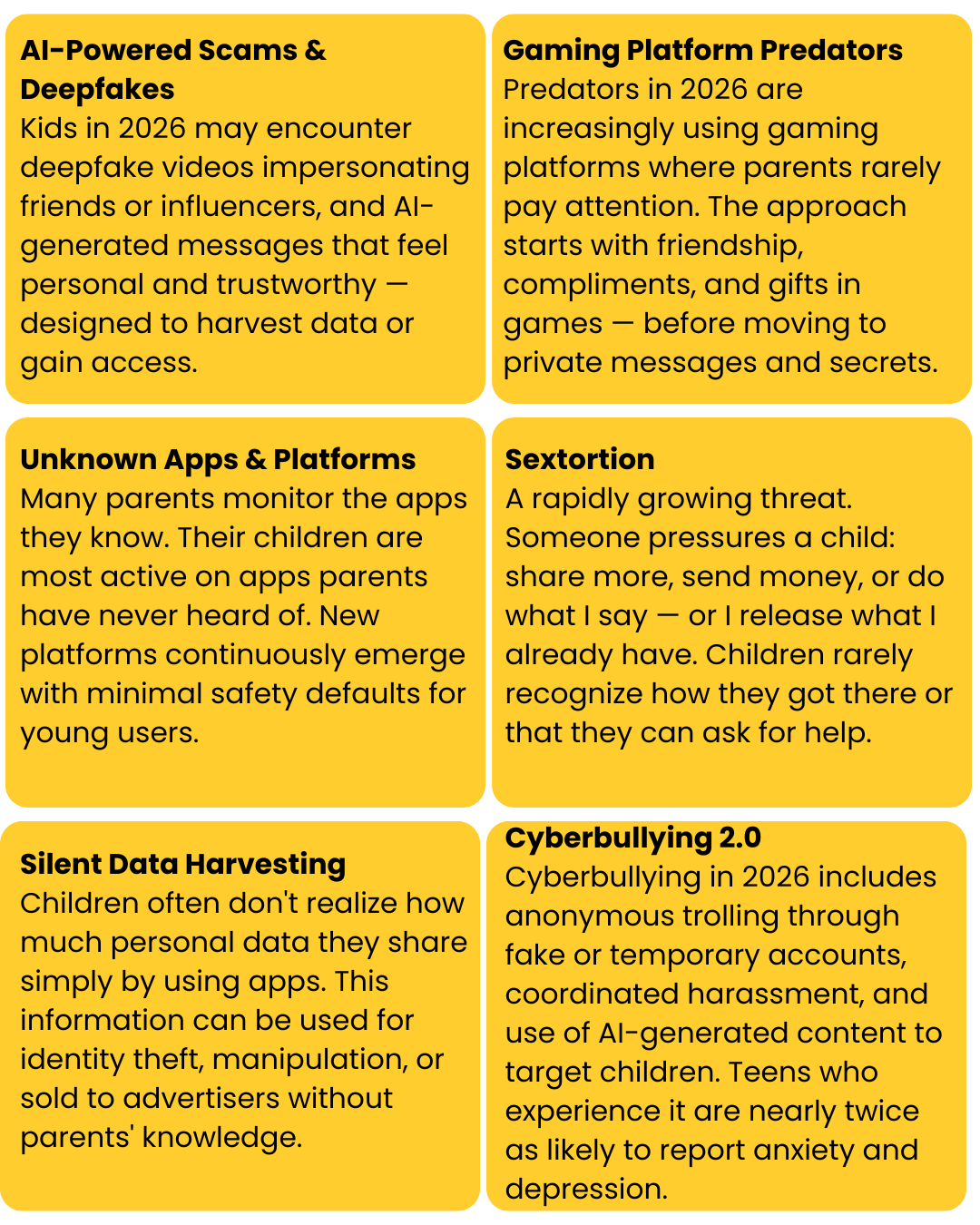
5 Hidden Ways Your Child's Privacy Is Already at Risk
Section 03
The Sharenting Problem: When Parents Are the Risk
There's a word for the practice of parents oversharing their children's photos, milestones, and personal details on social media: sharenting. And in 2026, it's finally being recognized for what it can be — a privacy violation against your own child.
The first generation of social media kids is now old enough to speak for themselves. And many are describing what it felt like to discover years of their childhood posted without their consent — their struggles, their embarrassing moments, their faces, their locations — all archived online for anyone to find.
"Privacy is the new luxury in parenting. The era of posting every toddler meltdown or potty training fail for likes is coming to a close."
— 2026 Parenting Trends Research
Every photo you post of your child potentially reveals their appearance, rough location, school uniform, neighborhood, and daily routine. That information is searchable, saveable, and permanent — even after you delete the original post.
Practical Sharenting Guidelines
This isn't about never sharing — it's about sharing thoughtfully. Before posting, ask yourself: Would my child be okay with this being visible in 15 years? Does this image reveal their location, school, or routine? Am I sharing this for them, or for me? Would I want someone to post this of me?
Section 04
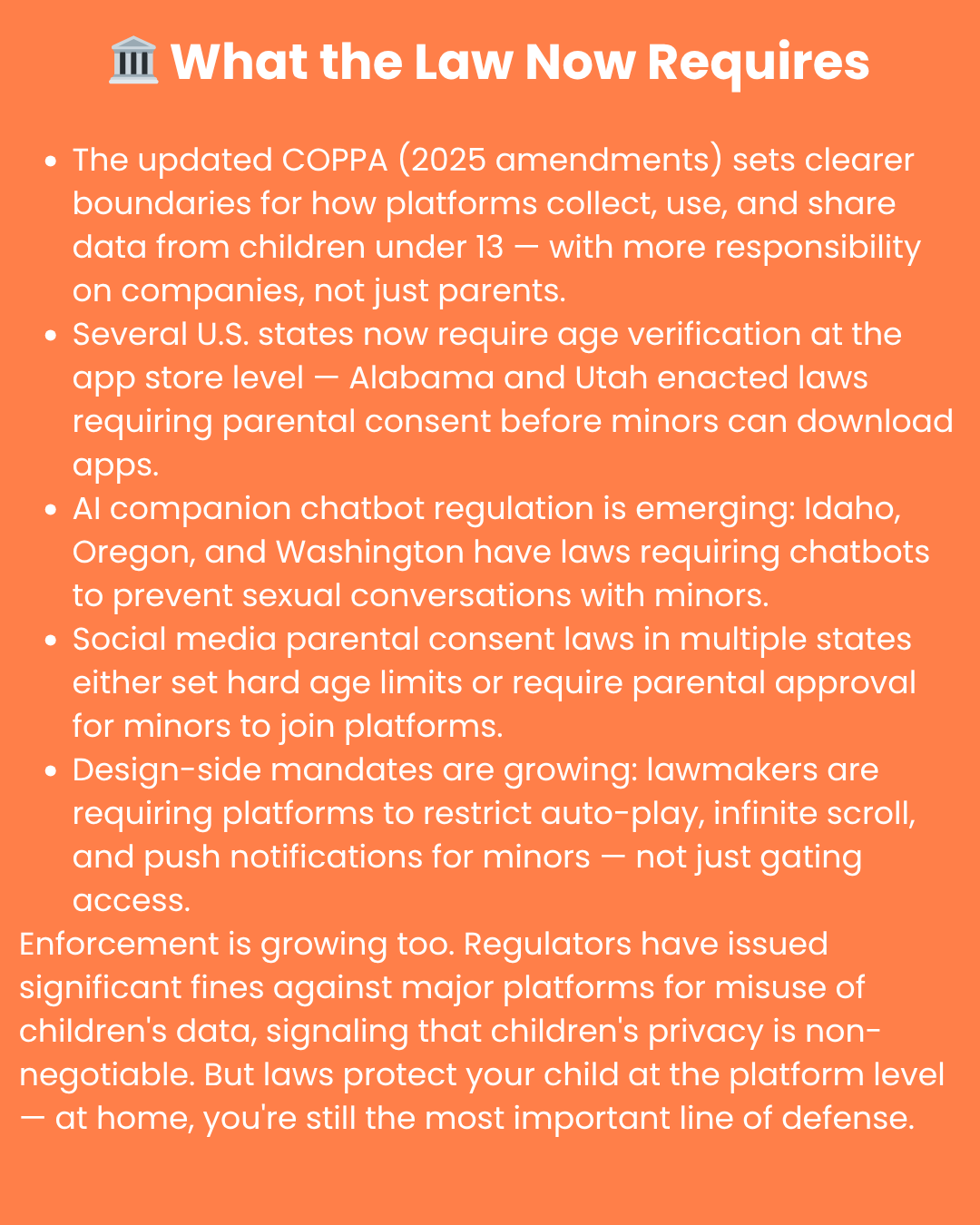
New Laws Protecting Your Child Online in 2026
The legal landscape around children's online privacy has shifted significantly. Here's what's actually working in your favor right now — and what still needs to change.
Section 05
The 7-Step Family Privacy Action Plan
The most effective privacy protection isn't the most technically complex — it's the most consistently practiced. Here's a concrete plan any family can implement this week.
1
Have the Privacy Conversation — Today
Online privacy requires the same frank conversation as stranger danger and road safety. Frame it not as a scary lecture but as teaching your child to own their own privacy — a skill, not a fear. Most experts recommend starting between ages 4 and 11.
2
Do a Full App & Device Audit
Go through every device your child uses — phone, tablet, gaming console, smart speakers. Review what permissions each app has been granted (especially location and microphone). Revoke anything unnecessary. Check for apps you didn't know existed.
3
Tighten Privacy Settings Together
Walk through privacy settings on your child's favorite platforms together. Turn accounts to private. Remove location data from posts. Review who can see, message, and follow them. Making this a shared activity — not a parental inspection — builds cooperation and trust.
4
Teach the Warning Signs, Not Just the Rules
Telling a child "don't talk to strangers" no longer works — online threats don't present as strangers. Teach specific red flags: an adult who wants to keep the friendship secret; someone asking for photos; someone giving gifts for no reason; someone more interested in them than peers their age.
5
Create a Family Digital Agreement
Rules imposed on children breed resentment and workarounds. An agreement built together breeds ownership. Sit down as a family and write out what you believe about screen time, privacy, and online behavior. Let children contribute. A child who helped write the agreement is far more likely to follow it.
6
Use Parental Controls as a Layer, Not a Substitute
Parental control apps are useful but not magic — tech-savvy children find workarounds. Use them as a supplemental layer alongside open conversations, not as a replacement. The best tools flag risk patterns rather than handing you a full transcript, which preserves trust while maintaining safety.
7
Be the Person They Can Come To
Parental controls and privacy settings help. Knowing the warning signs helps. But the single most protective thing you can offer a child in 2026 is the certainty that they can come to you — not to be punished, but to be helped. Build that foundation first. Everything else is a layer on top of it.
Section 06
How to Talk to Your Kids About This (Without the Lecture)
Research consistently shows that children who feel they can talk to their parents about online experiences are significantly safer online. The barrier isn't knowledge — it's tone. Here are conversation starters that open dialogue rather than close it.
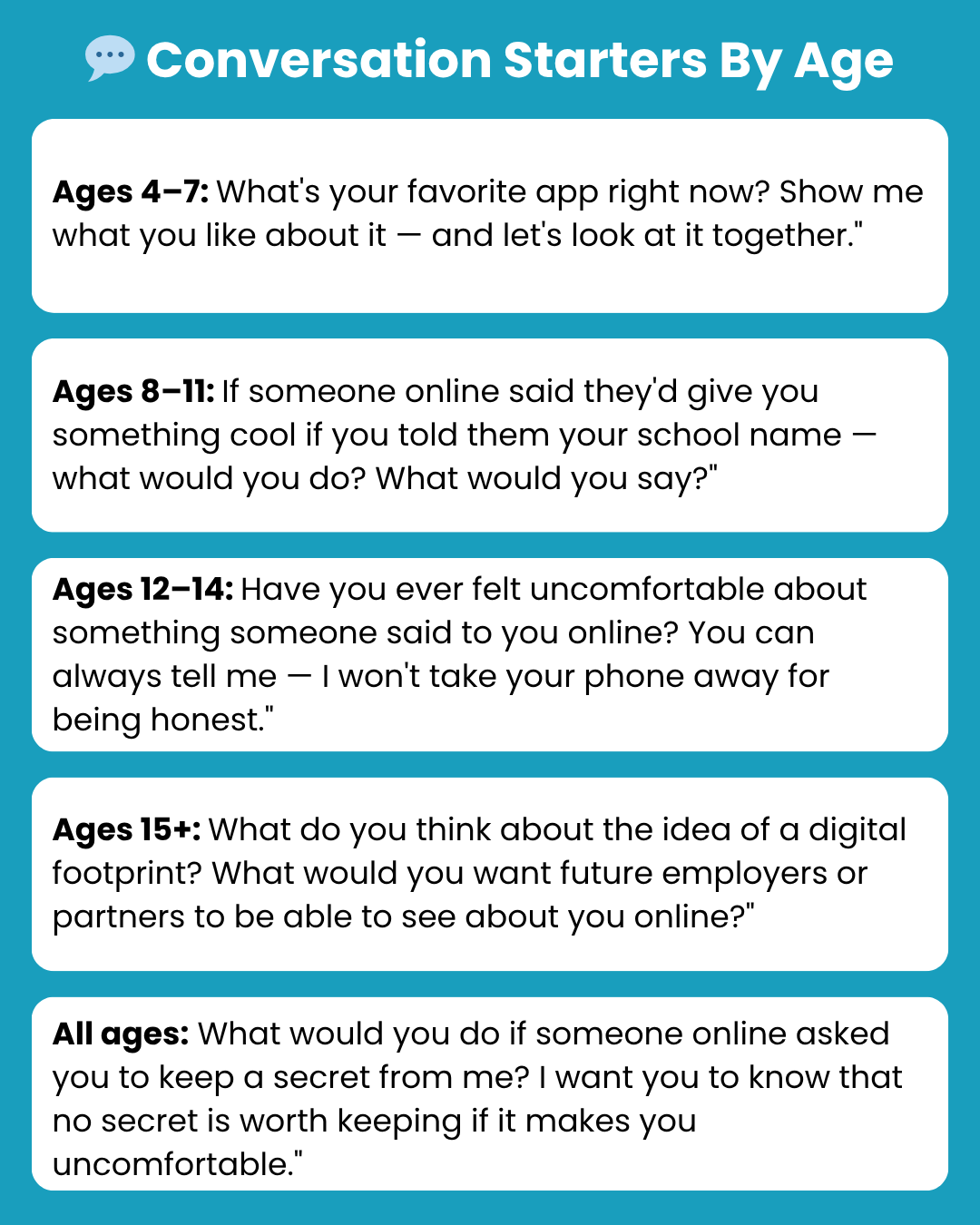
The goal of every conversation isn't perfect information transfer — it's keeping the door open. A child who knows they can come to you without fear of punishment is a child who will come to you when it matters most.
Your family deserves a village.
bttrfly connects parents to trusted local resources, community support, and personalized guidance — all in one place. Because parenting is better together.
© 2026 bttrfly · The Family App · Privacy Policy · Written for educational purposes. For professional advice, consult a qualified expert.
